 RBCopilot by Ununpentiums Labs
The DOT compliance & bid intelligence layer for highway contractors.
RBCopilot turns field events, specs, asphalt QC results, RFIs, claims and pay items into defensible project records, from bid to closeout. Spec answers are grounded in the SCDOT 2025 Standard Specifications and cite the section they came from.
RBCopilot Compliance
Field-to-contract intelligence once your project is awarded: SCDOT spec answers, asphalt QC, RFIs, claims, payment review and inspections, with RBCopilot Field for your crews.
- ✓ 8 SCDOT division specialists (Div 100–800)
- ✓ Asphalt QC · SC-M-400 pay factor · plant link
- ✓ RFIs · Claims · Submittals · Inspections
- ✓ Pay estimates · Daily reports · Audit log
RBCopilot Bid
From the bid package to the bid report: reads the whole IFB and drawings (OCR included), takes off every sheet, fills the bid intake, the owner's forms and your checklist, with 12 specialist bid agents and an orchestrator.
- ✓ Complete bid process in one click · bid report PDF
- ✓ Plan takeoff from the full drawing set
- ✓ Owner / DOT forms and bid checklists filled
- ✓ DBE · Schedule · Safety · Risk · Proposal Writer
Quality control that
speaks SC-M-400.
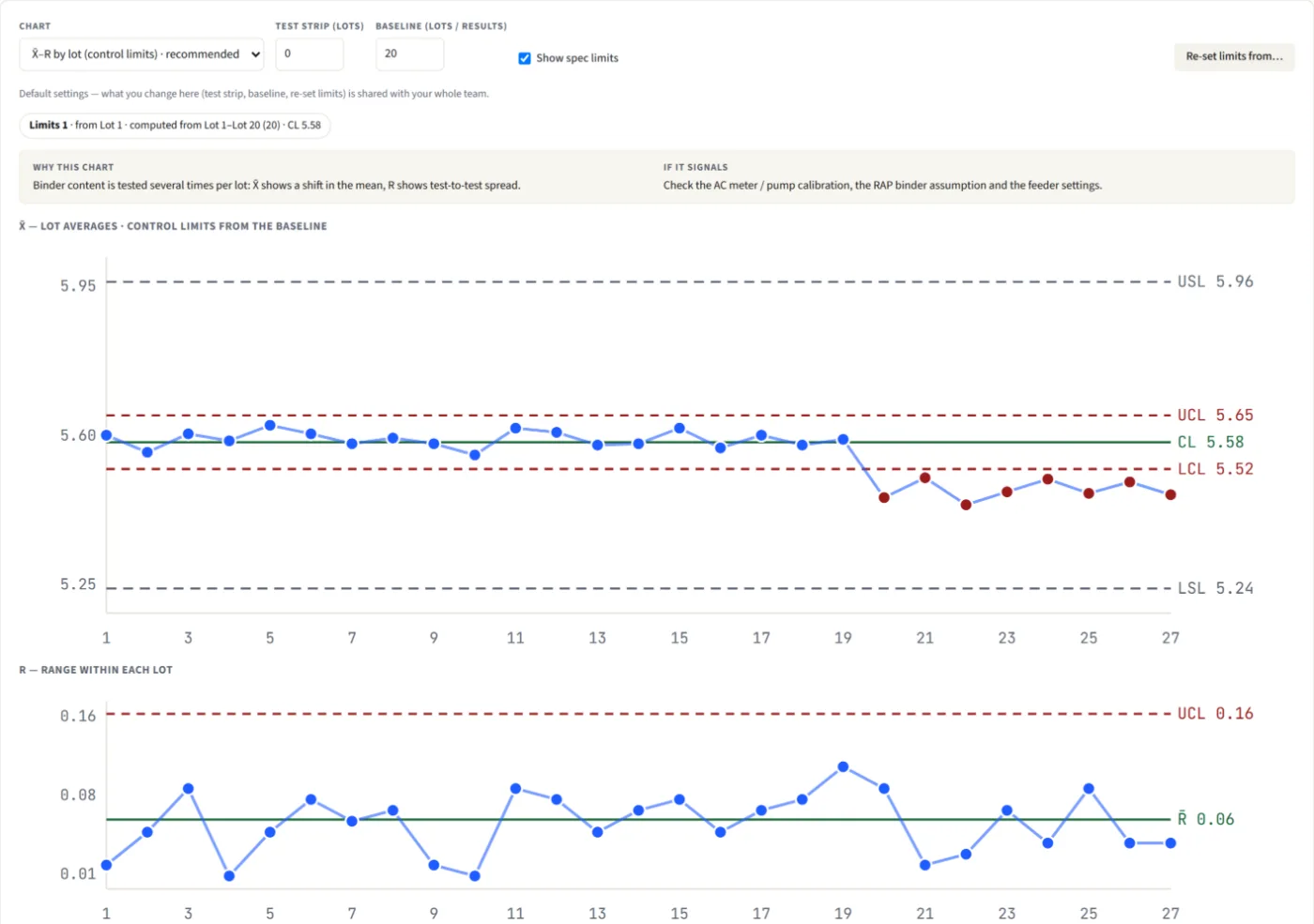
Log binder content, gradation, density, air voids and temperatures by lot. RBCopilot charts the process, flags signals while results are still inside the specification, and computes the SC-M-400 lot pay factor.
- X̄–R, I–MR, EWMA and CUSUM control charts with Western Electric rules
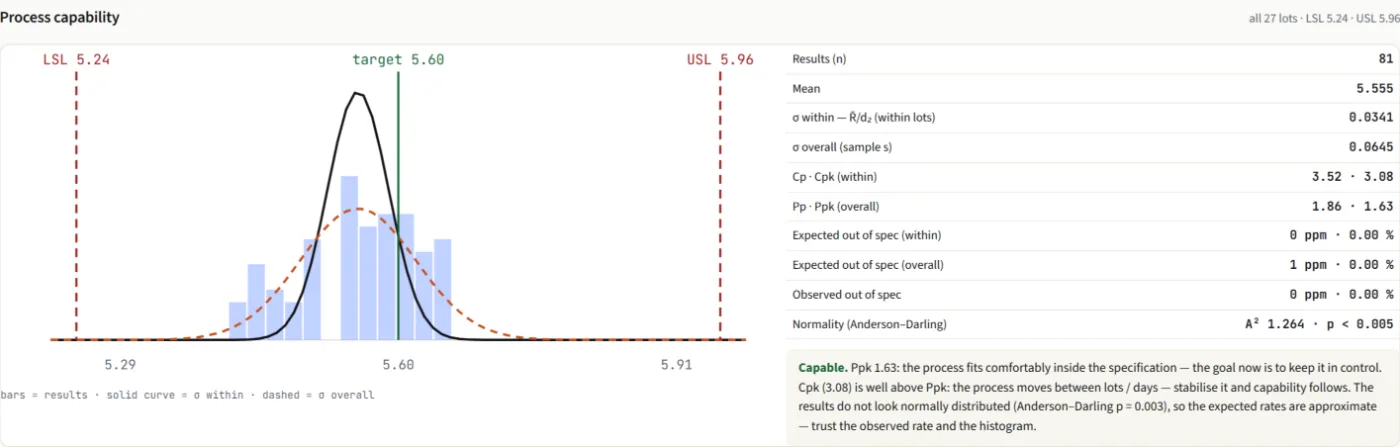
- Process capability: Cp, Cpk, Pp and Ppk
- Lot pay factor computed the way SC-M-400 §4.2.1.2 does
- Results from your plant's Asphalt Tech Pro system, through the plant link
SC-M-400 lot acceptance
Binder content, gradation and in-place density (cores or gauge) are judged per lot against SC-M-400 Tables 7–10. Air voids, VMA and delivery temperatures are checked against their tolerances.
Control charts
X̄–R, I–MR, EWMA and CUSUM charts plus a weekly out-of-spec P chart, with Western Electric rules 1–4 and a six-point trend rule. Re-baseline the limits after a process change.
Process capability
Cp, Cpk, Pp and Ppk with expected and observed out-of-spec rates, a histogram and a normality check, summed up in a plain-language verdict.
Lot pay factor
Computes the lot pay factor the way SC-M-400 §4.2.1.2 does. Enter the lot's tons and unit price to see the bonus or deduction in dollars.
QC data intake
Type results in, paste rows from Excel or Google Sheets, photograph a test report or upload a PDF report. Values are read out for you, and nothing is saved until a person has checked them.
Plant link: Asphalt Tech Pro
Delivery tickets and lot quality results flow from the plant into Tickets & Materials and the QC charts. RBCopilot sends each project's agency, spec and stations back, so lots are judged under the right spec edition.
Follow one field issue
to a documented claim draft.
A 5-minute guided walkthrough with sample data: field evidence, SCDOT 2025 spec references, a notice, an RFI draft, pay-item backup and deadline tracking.
See RBCopilot in action
A quick walkthrough — from the field tablet to the compliance office.

Click to play · starts at 0:25
DOT contractors rarely lose margin on the bid.
They lose it on the paperwork.
On highway work, a defensible record is the difference between a paid change order and a written-off loss. These are the gaps that quietly erode profit between award and closeout.
Expired notices
A claim or delay notice missed by days can forfeit your right to recover. The deadlines hide in Division 100 and the special provisions.
Incomplete daily reports
Gaps in daily reports leave change orders, delays and disputed work unprovable exactly when it matters most.
Weak RFIs
Vague RFIs get vague answers — and never build the paper trail you need to defend scope, cost or time.
Claims without evidence
A claim is only as strong as the photos, quantities and timeline behind it. Scattered evidence means money left on the table.
Poorly documented pay items
Quantities placed but not documented by pay item are quantities you may never get paid for.
Undetected bid risk
Unbalanced items, missing JMFs and below-benchmark pricing become losses you only discover after award.
No field-to-pay traceability
When field events, specifications and pay applications live in different places, nobody can connect them under audit.
One intelligence layer,
from bid to closeout.
RBCopilot connects the specifications, the documents and the field into a single defensible project record — so every decision has a source, and every dollar has backup.
Built for the field.
Backed by the spec.
Every module speaks SCDOT 2025. From drilled shafts to lane closures — all wired.
One copilot.
Eight specialists.
Spec-referenced answers with source citations and an audit trail, grounded in the SCDOT 2025 Standard Specifications and, when your company has AI enabled, in the project documents it uploads.
Every deadline.
Every notice.
Zero surprises.
RBCopilot tracks claim notice deadlines, submittal due dates, aging RFIs, failed inspections and draft pay estimates, so nothing falls through the cracks on your SCDOT project.
- Alert dashboard: danger, warning and info tiers
- Claim notice deadline countdown, with in-app alerts in the last 48 hours, marked urgent under 12
- Overdue submittals and aging RFIs flagged automatically
- Missing daily report detection on active projects
- Pay items installed but unapproved or missing backup
- Bid risk AI scoring — 4 categories, AI mitigation packet
Price every bid
like you've seen them all.
Historical SCDOT bid analytics built on every SCDOT letting we have loaded: real bid tabulations showing who bid, what they bid and every unit price. Pay item benchmarks, similar projects, competitor patterns and risk alerts, every number traced back to a source document.
From field event
to documented record.
Built to protect margin,
not just store documents.
Every feature maps to a dollar you keep — by making your record complete, your claims defensible and your risk visible before it costs you.
Don't forfeit recoverable claims
Notice and deadline tracking surfaces the dates that decide whether a claim is recoverable — before they pass.
Close documentation gaps
Daily reports, photos and quantities are captured in the field and quantities are tied to the right pay items, so the record is complete when you need it.
See bid risk before you price
Bid risk review and historical pay-item benchmarks flag unbalanced or below-market items before they become losses.
Stronger backup for pay & changes
Change orders link to the field events behind them, and pay estimates carry per-item quantities and backup status.
Audit-ready traceability
Answers carry their spec citations, and contracts, pay estimates, change orders, RFIs and claims keep a change history of who changed what, and when.
Defensible from bid to closeout
One continuous record means nothing gets lost in the handoff between estimating, the field and the office.
Engineering depth,
not generic AI.
Grounded in real pavement engineering
RBCopilot is built around asphalt, concrete and pavement engineering, the disciplines that decide whether DOT work passes or fails. It pairs that domain knowledge with the SCDOT 2025 Standard Specifications and SC-M-400 asphalt acceptance, so guidance reflects how roads are actually built, inspected and paid in South Carolina.
Source-linked. Audit-ready.
Contractor-controlled.
RBCopilot supports your team — it doesn't replace your judgment. Every output is traceable and every decision stays with you.
RBCopilot assists project teams with document review, compliance tracking and evidence organization. Final contractual, engineering and legal decisions remain with the contractor's authorized professionals.
Frequently asked questions
What RBCopilot does, who it's for, and how it protects margin on DOT and SCDOT road projects.
What is RBCopilot?
Who is RBCopilot for?
Does RBCopilot use the SCDOT 2025 Standard Specifications?
How does RBCopilot help protect margin?
Does RBCopilot replace engineering or legal judgment?
Is there a field app for crews?
Protect your margin
from bid to closeout.
See how RBCopilot turns your specifications, field events, RFIs, claims and pay items into one defensible record — and where it protects margin on your next DOT project.